
Learn › Technique
Breaking Down the Pool Turn: The Physics Decides Where Your Momentum Goes
Six steps, worked out from Alexey Molchanov's demonstration. The point is not to turn fast — it is to avoid braking away the momentum you arrived with. Plus a counterintuitive one: pushing off the wall too hard can mean you came in too fast, or too slow.
Video credit: the original demonstration is from Alexey Molchanov's Instagram
(@alexeymolchanov). What follows is my
breakdown and teaching commentary; the demonstration footage belongs to its author.
>
A tip: YouTube lets you slow playback down from the settings button at the bottom right.
For something like a turn, 0.25× speed makes a great deal more visible.
Most people train the dynamic apnea turn by asking how to turn faster.
That is not really the point. The point is that the momentum you arrived with should not get wasted on the wall.
What happens the moment your hand touches the wall
When your hand touches the wall, the physics decides where your remaining momentum goes.
There are two outcomes:
- You stop completely — 180 degrees of loss, which is braking. All the speed you worked for goes back into the wall, and you start again from zero.
- You redirect the remaining momentum — same energy, pointed a new way, still working for you.
Your arm is a good guide, but your whole body position is helping too.
The six steps
1. Bring your speed down first
This is the first step, not the last. Arrive at full speed and all you get is a brake.
2. Move your hand to the front-left, and leave the centre for your hips
Assuming you push with your right hand: move it slowly to the front-left, leaving the centre line free for your hips.
Your hips are about to rotate into that space. The hand gets out of the way first.
3. Fingers touch, and the arm absorbs some of the momentum
Once your fingers are on the wall, let the arm absorb part of the remaining forward momentum and use it to guide where your body goes.
Your arm bending at this point is normal. The arm is a shock absorber, not a post.
4. Knees in, body tucked
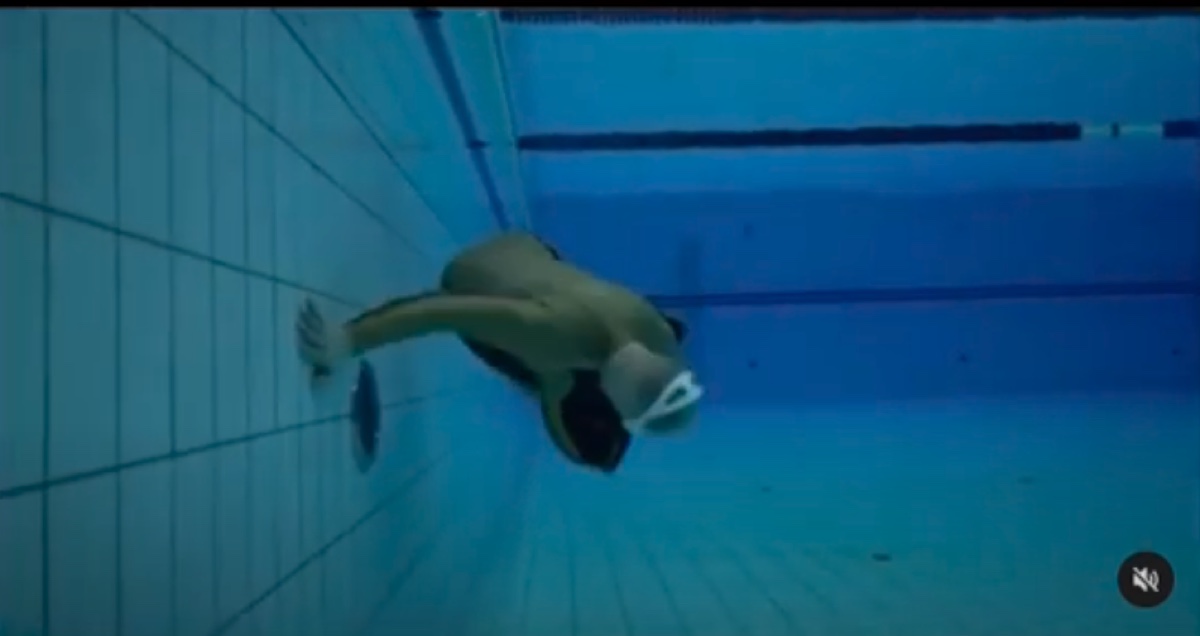
A tucked body is a body that can actually rotate underwater.
If your head will not come round, or you feel stuck, use the reaction force of your arm pushing off the wall to bring your head round to face forward.
5. Hips round, and only push when both feet press equally
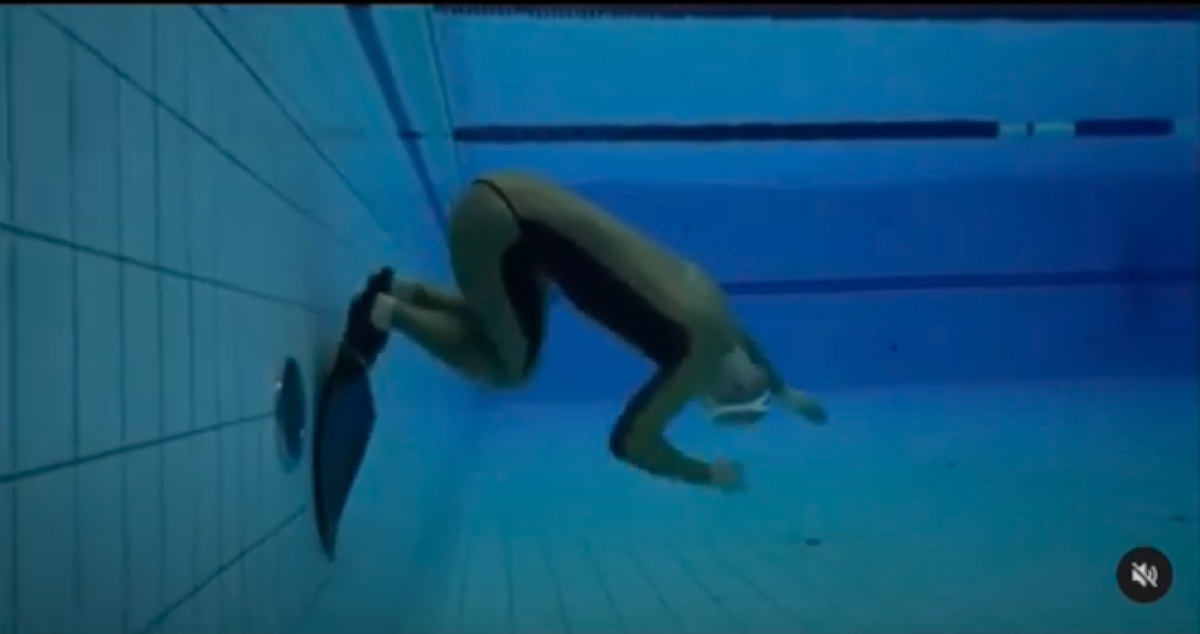
Rotate your hips round, and push off only when both feet are pressing on the wall with equal force. One foot heavier than the other and the wall will send you off crooked.
In the instant before you push, your hips are at their highest point. But throughout the whole turn, keep your head at the height of your direction of travel — or at least intend to.
Because the hips are highest just before the push, your head will be at its lowest. That is normal.
6. Your shoulders do not have to be square when you leave
As you push off, your shoulder line does not have to be fully square, because squaring it on the wall means spending too much of the turn correcting your position.
Square it during the time between the push and your legs reaching full extension. You rotate as you leave — roughly from 45 degrees to zero.
Pushing off too hard? Two opposite causes
Here is the counterintuitive one. If your push off the wall is very forceful, there are two possible reasons:
- You were swimming too fast before the turn
- You were swimming too slow before the turn
Too fast, and the momentum arriving is more than the arm can absorb. The body gets stopped against the wall, so you need a big push to get out of there.
Too slow, and there is no momentum left to redirect. You are effectively starting from standstill, so you have to generate the speed yourself.
Both waste oxygen, and both leave you with an unstable position coming off the wall.
So working out, for your own dynamic endurance, how far from the wall you should start slowing and how much you should slow by, matters a great deal. The number is different for everyone, and it changes as your endurance does.
Recap
- The goal of a turn is not speed, it is not braking away the momentum you have
- When your hand touches the wall there are only two outcomes: brake, or redirect
- A bending arm is normal — it is a shock absorber, not a post
- Push only when both feet press equally; hips highest and head lowest just before the push is normal
- Square the shoulders after you leave, do not spend turn time correcting on the wall
- A hard push can mean too fast or too slow. Find your own deceleration distance and speed