Learn › Equipment
A Scratched Plastic Mask Is Not Rubbish: Replace the Lens Yourself
Plastic lenses are light and low-volume, and they scratch easily. The good news is that on a moulded mask the lens was fitted afterwards, so it comes out. Includes a video walkthrough and a way to guess which masks share a lens.
Freediving mask lenses come in two kinds: plastic and glass.
Plastic lenses are light, and easier to form into a curve, which is how they achieve lower internal volume — and low volume is popular among freedivers, because the less air a mask holds, the less you have to spend equalising it on the way down. (Why that matters is in how to pick your first freediving mask.)
The price you pay is that plastic scratches easily.
After a while the lens accumulates fine marks and everything looks hazy. Does a scratched plastic mask just go in the bin?
No.
Why it can be replaced: the lens was never moulded in
If what you have is a mask made in a mould, there is a good chance the lens can be swapped.
On this kind of mask the lens was never formed as one piece with the frame — different manufacturers pair it with differently coloured frames, and the lens goes in afterwards. If it went in, it comes out.
Watch the video and you will see this is something you can do yourself. The mask is as good as new, and that is one less mask going to landfill.
Which masks might share a lens
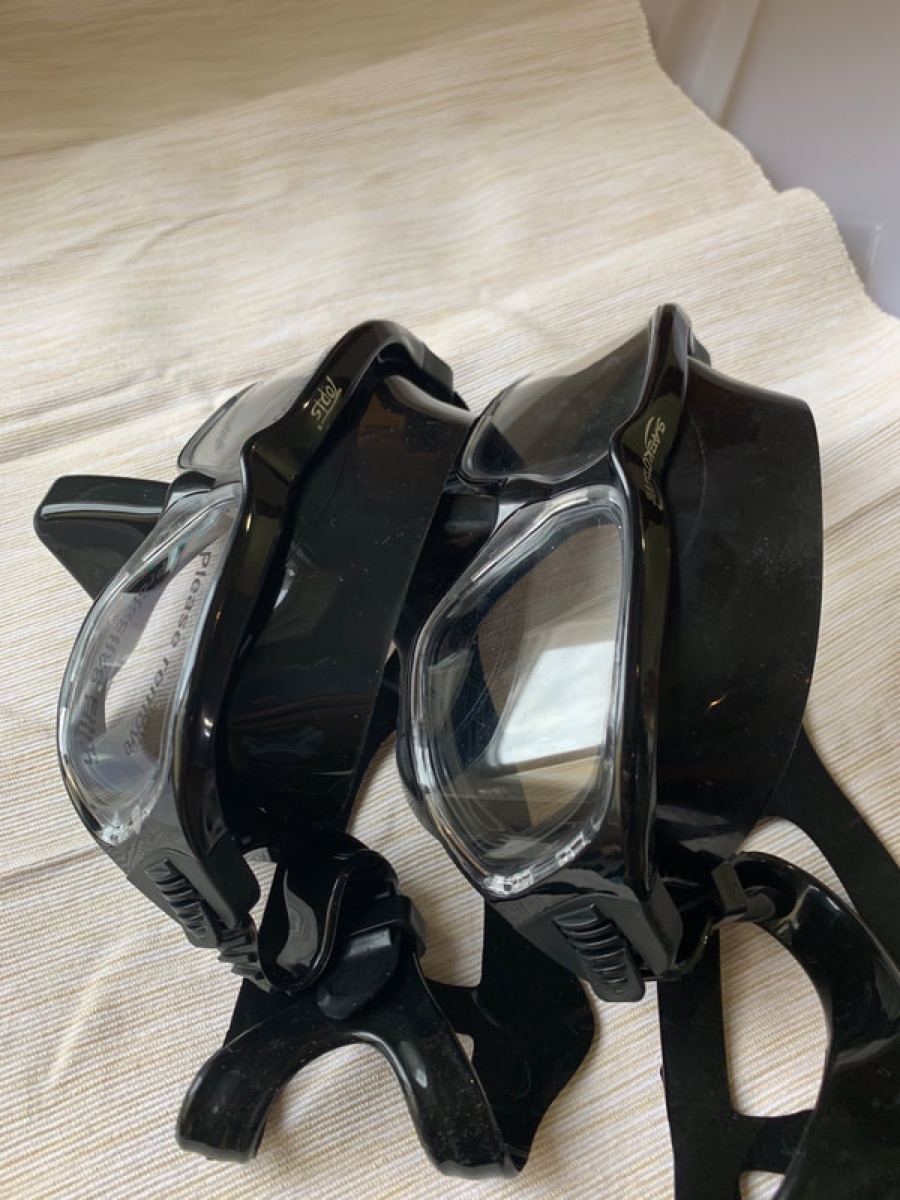
From what I have seen, the equivalent models from saekodive, problue and Topis M228 "might" take each other's lenses — those three brands' versions of this mask look extremely alike.
This is an observation, not a guarantee. I cannot confirm they come from the same mould, so compare them yourself before buying.
How do you spot one? Look at the lens when you are buying a new mask:
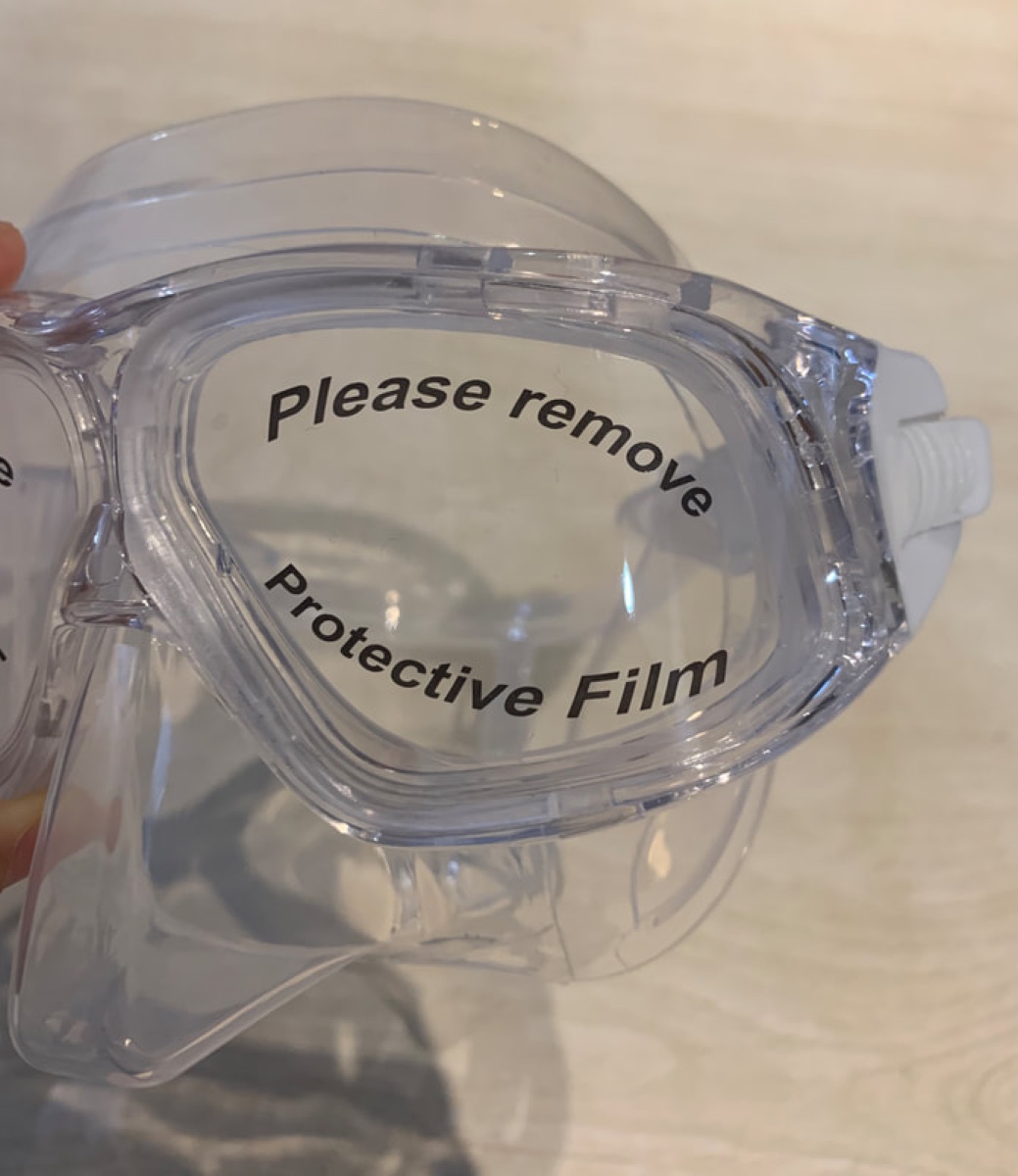
If the lens looks like this, it may be the same replacement spec. So if you dive a saekodive or a problue, it is worth trying.
(While we are here: the film on a new lens has to come off completely or nothing will stop it fogging — and a plastic lens must never be burned with a lighter. Both are covered in how to pick your first freediving mask.)
Recap
- Plastic lenses are light and low-volume, but scratch easily; glass is the other way round
- On a moulded mask the lens was fitted afterwards, so it can be replaced
- saekodive, problue and Topis M228 equivalents might share a lens — that is an observation, so check before you buy
- The look of the lens on a new mask is a clue to whether it is the same replacement spec
- Replacing a lens is cheaper than replacing a mask, and it is one less mask thrown away